Next to the Sultan Palace, precisely at the west side of it, there is a Museum
Kereta or Museum of Chariot. Generally, the collections were bought at the era
of Sri Sultan HB VIII who was considered as the reformer Sultan. At this time,
there were no more war in the kingdom of Yogyakarta, therefore Sultan began to
do other activities such as renovating the palace and buying chariots.
There are 22 chariots kept at the Museum Kereta Yogyakarta. The museum used to
be the garage for the chariots of the palace. Some sacred chariots are isolated
and only opened as the visitors come. Those 22 chariots are:
-
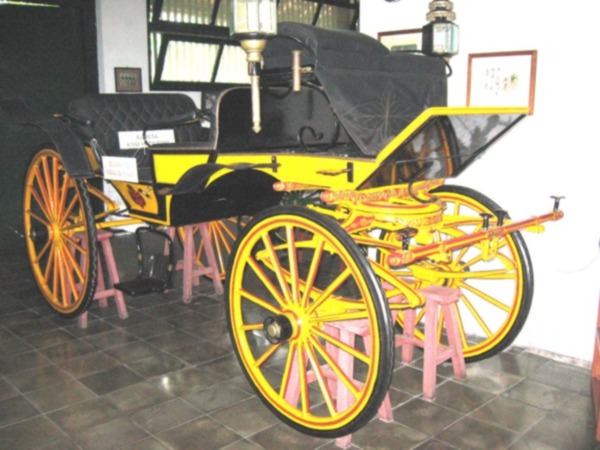
Kereta Kyai Jongwiyat
It was a relic of Sri Sultan HB VII which was manufactured in Netherlands in
1880. It was used in a war to control the soldiers' and etc. Sri Sultan HB VII
was the sultan who was often involved in wars with the Dutch. The chariot was
pulled by six horses. It was once used when the Sri Sultan HB X daughter got married.
Some of parts of this chariot have been changed such as the color that was changed
into yellow
(see picture).
-
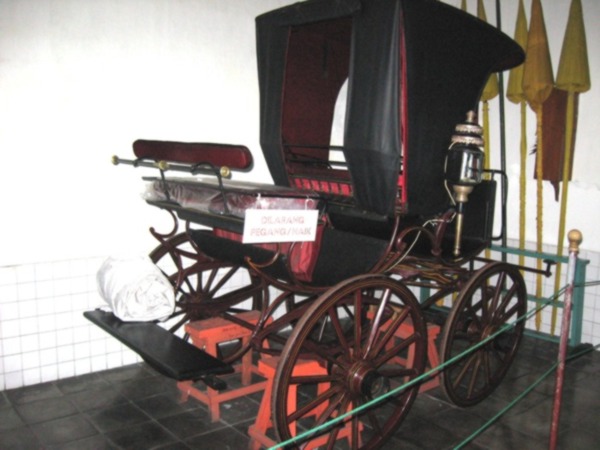
Kereta Kyai Jolodoro
It was a relic of Sri Sultan HB IV that was manufactured in Netherlands in 1815.
It was a chariot for women (from he word 'Jolo' = cruise and Doro=women). These
four horses had a driver who stood on the back of the chariot
(see picture).
-
Kereta Roto Biru
It was a relic of Sri Sultan HB VIII that was manufactured in Netherlands in
1901. It was caled Roto Biru since its blue colors almost in all over the part.
This carriage was used for the commander of the war
(see picture).
When Sri Sultan HB X' daughter got married, it was used to take his son in law's
parents. The carriage used four horses.
-
Kyai Rejo Pawoko
The chariot was made in 1901 in the era of Sri Sultan HB VIII. It was dedicated
for his brothers. Some said that this four horses carriage was bought as the Pak
Karno’s birthday in 1901
(see picture).
-
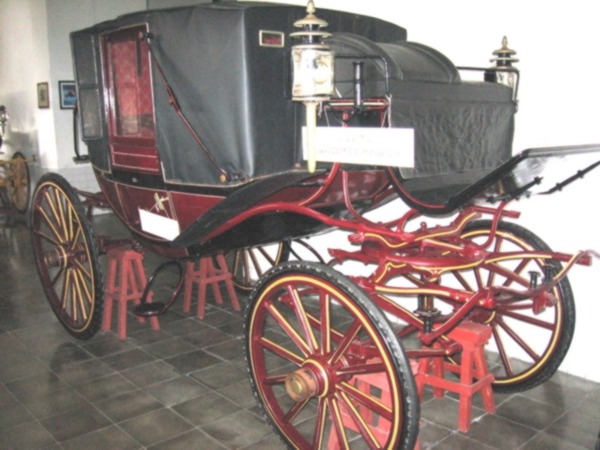
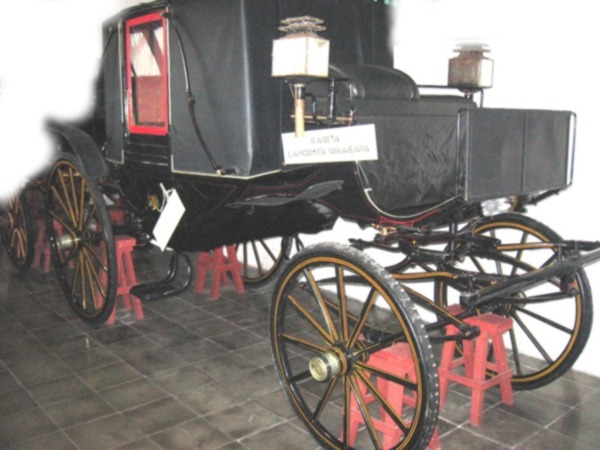
Kereta Landower
It was a relic of Sri Sultan HB VIII that was manufactured in Netherlands in
1901. Long time ago, it was displayed at Ambarukmo Hotel. The chariot needed four
horses to run.
(see picture)
-
Kereta Premili
It was manufactured in Semarang in 1925 with spare-parts from the Dutch. This
four horses chariot was used to pick up the palace dancers. On one of the wheels,
there was a note ‘G.Barendsi’.
(see picture)
-
Kereta Kus No: 10 (read: Kus Sepuluh).
It was a relic of Sri Sultan HB VIII that was manufactured in Netherlands in
1901. It used to be a Landower that could be used for marriage. Its color was
changed from green into yellow.
(see picture)
-
Kereta Kapulitin
The chariot was a race chariot. It was bought in the era of Sri Sultan HB VII
who really loved horse racing. It was only a horse carriage.
(see picture)
-
Kereta Kyai Kutha Kaharjo
It was a relic of Sri Sultan HB IX that was manufactured in Berlin in 1927. It
was used to accompany the events hold by the palace. The chariot needed four horses
to run.
(see picture)
-
Kereta Kus Gading
It was a relic of Sri Sultan HB VIII that was manufactured in Netherlands in
1901. The chariot needed four horses to run.
(see picture)
-
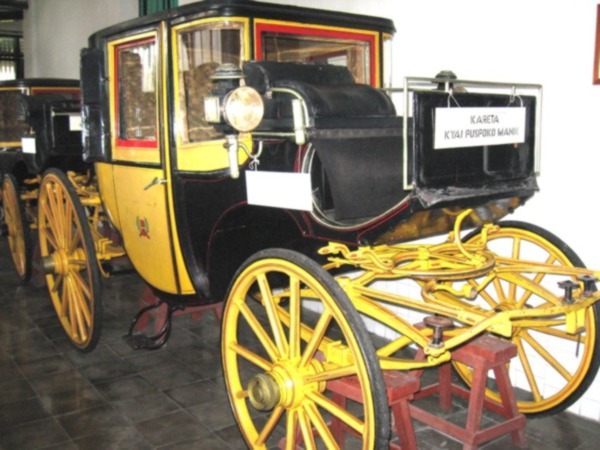
Kereta Kyai Puspoko Manik
It was made in Amsterdam. Besides used to accompany the events hold by the palace,
it can also be used for marriage. The chariot needed four horses to run.
(see picture)
-
Kereta Roto Praloyo
This is a corpse carriage that was bought in the era of Sri Sultan HB VIII in
1938. It was the carriage that brought the body of Sultan from the palace to Imogiri.
This chariot needed eight horses to run.
-
Kereta Kyai Jetayu
It was bought in the era of Sri Sultan HB VIII in 1931 as vehicle for the Sultan’
daughters. It needed four horses that the driver rode the horse.
(see picture)
-
Kereta Kyai Harsunaba
It was a daily vehicle for Sri Sultan HBVI-VIII that was bought in 1870. It needed
four horses.
(see picture)
-
Kereta Kyai Wimono Putro
It was bought in the era of Sri Sultan HB VI in 1860 for the ceremony of the
crown successor. It needed six horses.
(see picture)
-
Kereta Kyai Manik Retno
It was bought in the era of Sri Sultan HB VIII in 1815. Made in the Dutch, it
was cruiser for the Sultan and his wife. It needed four horses.
(see picture)
-
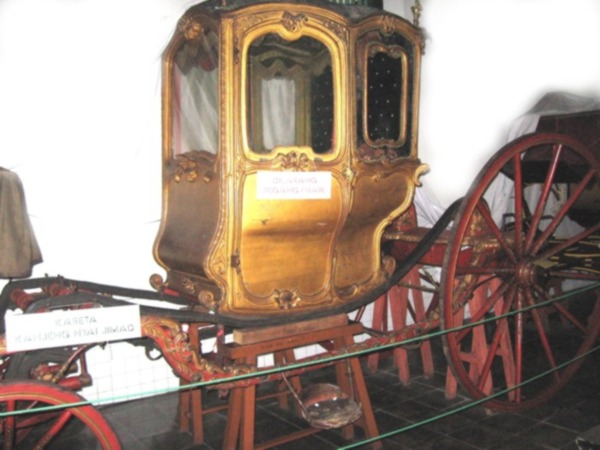
Kereta Kanjeng Nyai Jimad
This is the sacred chariot of the palace. It was made in 1750 as the gift of
the Spain that had a relationship in trading with the palace. The chariot was
used by Sri Sultan HB I - III. This chariot needed eight horses to run.
(see picture)
-
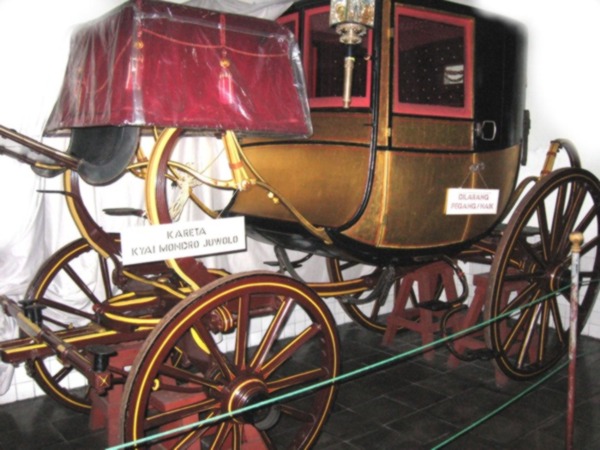
Kereta Kyai Mondro Juwolo
This chariot was used by Pangeran Diponegoro. Made in 1800, it was renovated
as Festival Kraton Nusantara was held. This chariot needed eight horses to run.
(see picture)
-
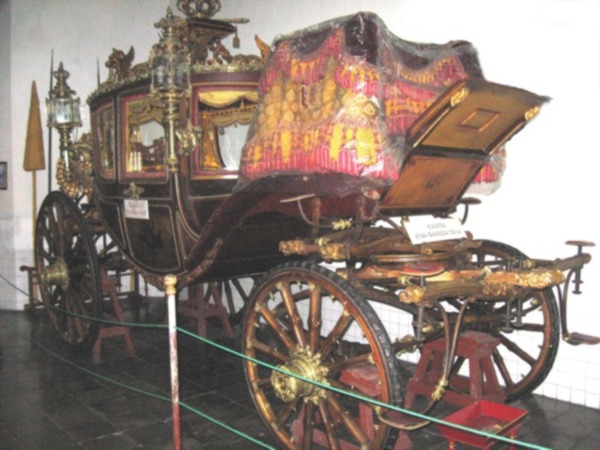
Kereta Garudo Yeksa
Made in 1861, it was used in the era of Sri Sultan HB VI for the Sultan successor.
This chariot was also called as Kareta Kencana (golden chariot). This chariot
needed eight horses to run. All of the part of this chariot is still original
including the symbol of Garuda made of 18 carat 20 kg. The crown of the chariot,
was believed had inspired Soekarno to create Tugu Monas. The designer of the chariot
was Sri Sultan HB I himself. This one horse carriage is still used until now.
(see picture)
-
Kereta Landower Wisman
It was bought in the era of Sri Sultan HB VIII in 1901 from the Dutch and was
once renovated in 2003. This chariot needed four horses to run.
(see picture)
-
Kereta Landower Surabaya
This chariot was ordered from the era of Sri Sultan HB VII, however it can be
used in the era of Sri Sultan HB VIII. It was made in Switzerland and used for
transportation vehicle.
(see picture)
-
Kyai Noto Puro
It was a relic of Sri Sultan HB VII that was manufactured in Netherlands. The
chariot was used in war. It was once renovated. The chariot needed four horses
to run.
(see picture)
Besides those chariots, Museum Kereta Yogyakarta also provided the replica of
pelana or horse belt used by Sultan, Pelana Kyai Cekatha. The real belt was ornamented
with gold and diamond. Some belt was made of tiger leather. Other collections
were clothes and some accessories for horse riding.